


Can a Perimeter Security Spec Actually Survive the Field? Answering the Skeptics

A proposed perimeter intrusion detection spec lands on the table for a remote site — sensor spacing, detection range, alert latency, all confidently stated. Claim: this spec, as written, will deliver reliable perimeter coverage with an acceptable false-alarm rate once deployed. Before signing off on it, every one of the following objections deserves a real answer, not a reassurance. Here's what held up under scrutiny and what didn't.
"The detection range on the spec sheet looks generous. Why would that not hold up in the field?"
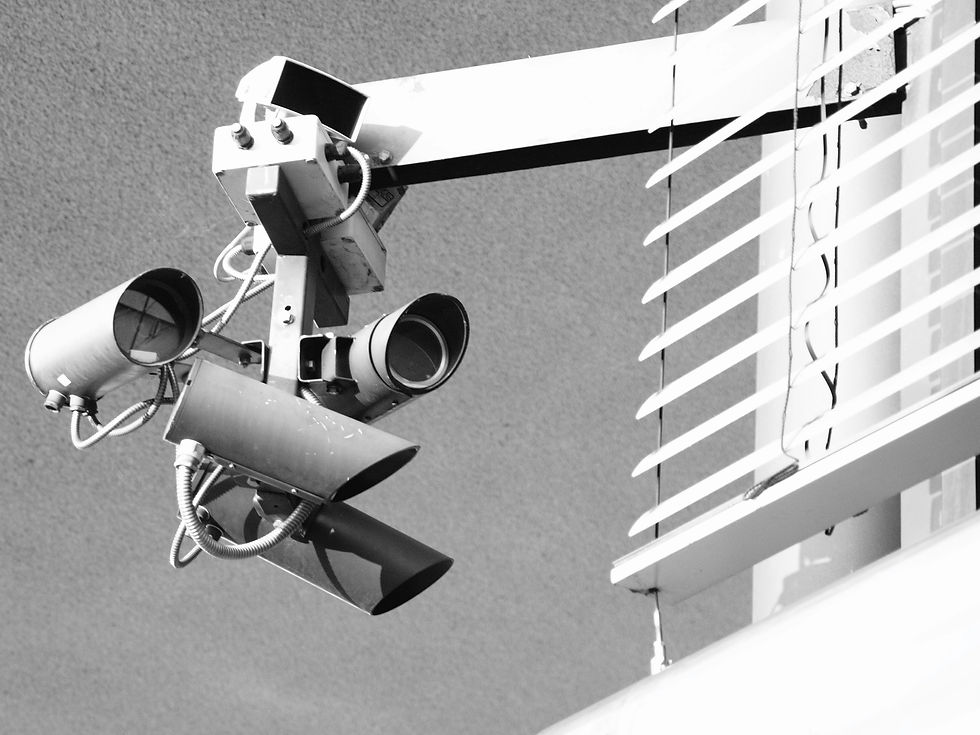
Because a spec-sheet detection range is almost always measured under close-to-ideal conditions — clear line of sight, no vegetation, no ground clutter, controlled temperature. A remote perimeter site rarely offers all of that simultaneously. LoRa-based perimeter sensors, PIR-based motion detectors, and radar-based intrusion detection all lose real range to exactly the conditions a genuine remote site has in abundance: vegetation growth, uneven terrain, temperature extremes affecting sensor sensitivity, and — for RF-based systems specifically — multipath and absorption effects a flat test field never exposes. The right response isn't rejecting the spec's range number outright, it's demanding the range figure be qualified: under what conditions, tested how, with what margin built in for the site's actual terrain.
THE RULE: A detection range with no stated test conditions attached is not a specification. It's a marketing number wearing a specification's clothes.
"Isn't a higher sensor density just the safe answer regardless?"
No — and this is the objection worth pushing hardest, because it's counterintuitive. Higher sensor density doesn't just cost more; past a certain point it actively degrades the system by raising the false-alarm rate, because more sensors means more independent chances for wildlife, weather, or vegetation movement to trigger a false positive, and an operations team that gets flooded with false alarms starts ignoring the system entirely — which is a worse outcome than slightly sparser, more carefully-placed coverage with a lower nuisance-alarm rate. The right density is the minimum that achieves the required detection probability at the required range, not the maximum the budget allows.
"What about the trade-off between detection range and false alarm rate specifically?"
This is the trade-off most vendor specs truly don't surface clearly, and it's real: extending detection range, whether by increasing sensitivity or sensor power, near-universally increases the population of non-target movement the sensor can also detect — a longer-range PIR or radar sensor picks up more wildlife, more vegetation sway, more weather-driven false triggers at the extended range, not just more genuine intrusions. A spec that states an aggressive detection range without a corresponding, honestly-stated false-alarm-rate figure at that same range is presenting half the picture.
Detection technology | Typical range driver | What degrades it in the field |
PIR-based motion | Thermal contrast between target and background | Temperature extremes reduce contrast; vegetation and wildlife trigger false positives |
Radar-based | Transmit power, antenna gain | Multipath off terrain/structures; ground clutter at low mounting height |
LoRa-linked sensor mesh | RF link budget between node and gateway, not the sensing element itself | Terrain obstruction, vegetation growth over the deployment’s life, not just at install |
"Can't the false alarm problem just be solved with better analytics after the fact?"
Partially, and it's worth being precise about where that partial answer runs out. Correlating multiple sensor types — a PIR trigger confirmed by a radar or vision check before escalating an alert — reduces false alarms, using exactly the tiered-escalation pattern that shows up across well-designed edge sensing systems generally: cheap, sensitive detection at the first tier, a more expensive, more specific confirmation step before an alert reaches a human. What analytics can't do is fix a fundamentally miscalibrated first-tier sensor — if the base detection layer is so noisy that it's triggering constantly, no amount of downstream correlation logic fully recovers a system an operator has already learned to distrust.
THE RULE: Analytics-based false-alarm suppression is a real, valuable layer — and it's not a substitute for getting the base sensor's field-calibrated sensitivity right in the first place.
"What about alert latency — does the spec's stated response time actually hold up?"

This is where a proposed spec's numbers deserve the most direct scrutiny, because latency depends on the full chain — sensor detection time, mesh transmission time to a gateway, gateway-to-monitoring-center delivery, and any correlation/confirmation delay from a tiered-escalation design — not just the sensor's own reaction time, which is usually the only number a vendor spec states. A LoRa-based mesh specifically has real, regulation-driven duty-cycle constraints on transmission frequency that can add meaningful delay under certain traffic patterns, and a spec that quotes only the sensor's detection latency while ignoring the mesh transmission and confirmation delay is quoting a number that's real but incomplete.
What's Left Standing After the Scrutiny
A perimeter spec built around a single, generous-sounding detection-range number, without stated test conditions, without an honest false-alarm-rate figure at that same range, and without accounting for the full detection-to-alert latency chain, does not survive this level of scrutiny — and shouldn't be signed off on as written. A spec revised to state range under realistic, site-representative conditions, pair every range figure with its corresponding false-alarm rate, use tiered multi-sensor confirmation rather than raw sensor count to control nuisance alarms, and quote latency as a full detection-to-alert chain rather than a single sensor's reaction time — that version holds up. The difference between the two isn't more expensive hardware. It's a spec that was pressure-tested against field conditions before it became a commitment.
"How do you actually validate a false-alarm-rate claim before committing to a vendor?"
The direct, practical answer: run a real pilot at the actual site, for long enough to capture the site's genuine seasonal and weather variation, before committing to full deployment. A one-week pilot in fair weather tells you almost nothing about how the system behaves during the specific conditions — heavy rain, high wind, a wildlife migration season — most likely to actually drive false alarms. A pilot that's too short or too favorably timed produces a false-alarm rate that looks good on paper and falls apart once real seasonal variation shows up, which is exactly the gap between a vendor's controlled test conditions and a genuine remote site that this whole line of questioning exists to catch.
"What if the spec was written by the same vendor selling the
hardware — is that a conflict worth worrying about?"
Yes, and it's worth naming directly rather than politely ignoring. A vendor writing the spec for their own hardware has an incentive to state performance figures under the most favorable plausible conditions, which isn't necessarily dishonest — it's just optimistic by default, in the same way any vendor's own marketing material tends to be. The practical mitigation isn't assuming bad faith, it's insisting on independent verification: either a genuinely representative site pilot as above, or references from other deployments in comparable terrain and climate conditions, checked directly rather than taken from a curated case-study list the vendor selected.
THE RULE: A vendor-authored spec isn't dishonest by default — it's optimistic by default. The fix is independent verification, not assumed bad faith.
"Doesn't all of this scrutiny just slow down a project that needs to get deployed?"
It adds real time upfront, and it's worth being honest about that cost rather than pretending this scrutiny is free. The trade being made is real time spent validating a spec before commitment against real time and money spent redeploying or retrofitting a system that turns out not to hold up in the field — and the second cost is reliably larger, both in dollars and in the reputational cost of a security system the client stops trusting. A week or two of deliberate spec review and pilot validation before signing off is a small fraction of a multi-year deployment's total timeline, and it's the point in the project where a bad spec is cheapest to catch and fix.
The Position That Actually Holds Up
A perimeter security spec deserves the same scrutiny a hardware team would apply to any other performance claim that a client's real-world outcome depends on — not blind trust in a vendor's number, and not reflexive distrust either, but a defined, repeatable verification process: demand test conditions alongside every range figure, demand a false-alarm rate alongside every range figure, pilot at the real site long enough to capture genuine seasonal variation, and treat a vendor's own spec sheet as a starting hypothesis rather than a settled fact. Every objection raised here has a real, workable answer — which is exactly why running through them explicitly, before commitment, is worth the time it costs.
"Who should actually own this verification — the buyer or the integrator?"
In practice, both, but for different parts of it, and being clear about the split avoids the common failure where each side assumes the other is handling it. The vendor or integrator proposing the spec owns providing test conditions, methodology, and a false-alarm figure alongside every range claim — that's a basic transparency obligation, not an optional extra. The buyer, or whoever is accepting the spec on the buyer's behalf, owns insisting on that transparency before sign-off and, ideally, owns commissioning an independent pilot rather than relying solely on vendor-supplied figures, because a vendor's own testing, however honestly conducted, is still testing under conditions the vendor controlled and selected.
A spec review process that assigns this responsibility explicitly — in writing, as part of the procurement process, not as an assumed courtesy — is far more likely to actually happen than one where everyone involved silently expects someone else to have checked it.
EurthTech delivers AI-powered embedded systems, IoT product engineering, and smart infrastructure solutions — Hyderabad, India. www.eurthtech.com


Comments