


Firmware Reliability: Why Your Code Works on the Desk but Fails in the Field?

Author: Srihari Maddula • Technical Lead, EurthTech
Reading Time: 25 mins
Topic: Reliability Engineering & Field Debugging

Bridging the gap between academic projects and industry reality.
It is the universal firmware engineering experience: The code compiles without warnings. The unit tests pass. It runs flawlessly on your dev board for a continuous 48-hour soak test. High-fives are exchanged, the PR is merged, and the fleet is flashed.
Three weeks later, the field reports start trickling in. Devices are locking up in Minnesota. Sensors are reporting garbage data in an industrial plant in Germany. A node in a solar farm keeps spontaneously rebooting every Tuesday at noon.
You pull the exact same firmware onto your desk, run the same inputs, and... nothing. It works perfectly.
Welcome to the abyss of field debugging. The truth is, the desk is a lie. Real-world environments are actively hostile to your embedded systems, and writing code that survives them requires a shift from "functional" programming to "defensive" reliability engineering.
The Desk vs. The Field: The "Clean Desk" Fallacy
The "Clean Desk" Fallacy is the dangerous assumption that a lab environment adequately represents the deployment environment. In reality, lab environments miss upwards of 90% of real-world edge cases.

Visualizing Clean engineering desk with oscilloscope and dev board. Photo via Unsplash.
On your desk:
Power is supplied by a pure, unfluctuating $2000 bench power supply.
The ambient temperature is a comfortable 22°C (72°F).
Electromagnetic Interference (EMI) is limited to the hum of office fluorescents.
Network latency is negligible, and physical connections are pristine.
Uptime rarely exceeds a few days before a re-flash or power cycle.
In the field:
Power is dirty, sagging under the load of heavy machinery or dropping out entirely.
Temperatures swing from -40°C in winter to 85°C inside a black plastic enclosure baking in the summer sun.
Industrial motors blast broadband EMI directly into your unshielded traces.
Connectors oxidize. Vibrations cause micro-fractures in solder joints.
The system must run flawlessly for 5 years without a single reset.
Your lab setup is a sterile hospital room; the field is a warzone.
The Silent Killers: Timing and Memory
When a device fails in the field but works on the desk, the culprits are usually invisible. They don't leave burn marks, and they don't happen deterministically.
Non-Deterministic Timing & Race Conditions (Heisenbugs)
On a desk, inputs usually arrive in a predictable order. In the field, asynchronous events—interrupts from sensors, network packets, user inputs—collide in infinite permutations.
When two threads or an Interrupt Service Routine (ISR) and the main loop access shared memory without proper atomic locks or mutexes, a race condition occurs. Because this depends on exact microsecond timing, it might only happen once every 10,000 cycles. When you attach a debugger, the timing changes, and the bug vanishes—the classic "Heisenbug."
SENIOR SECRET
Assert the impossible. Don't just assert what should be true; explicitly trap states that "can't ever happen." If a switch statement has an impossible `default` case, put a fatal error trap logging the exact program counter (PC) there. When the impossible happens in the field due to a corrupted pointer or race condition, you'll have a breadcrumb.
Memory Fragmentation and Leaks over Long Uptimes
Your 48-hour desk test won't catch a 10-byte-per-day memory leak. Over months, dynamic allocation (`malloc`/`free`) in embedded C/C++ fragments the heap. Eventually, a request for a contiguous block of memory fails, causing a hard fault or undefined behavior.
In high-reliability firmware, the rule is simple: Do not use dynamic memory allocation after initialization.
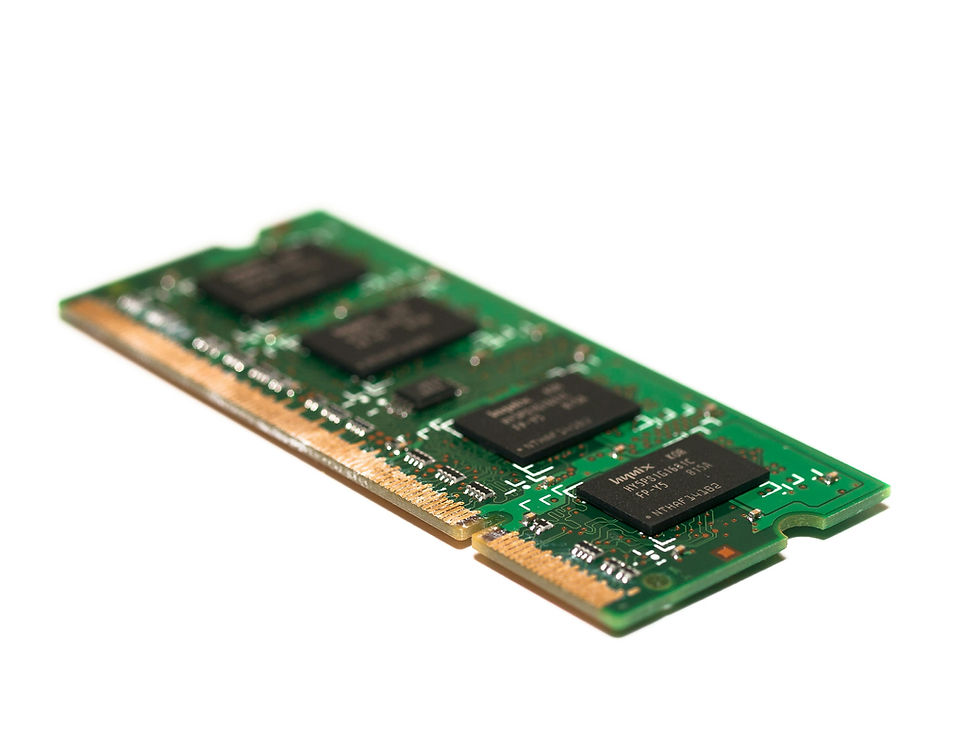
Visualizing Abstract digital memory blocks fragmenting. Photo via Unsplash.
SENIOR SECRET
Use log-circular buffers in static RAM. For field debugging, allocate a statically sized circular buffer in a region of RAM that survives soft reboots (`__attribute__((section(".noinit")))`). Log critical state transitions here. When the watchdog resets the device, dump this buffer to flash or transmit it on boot. You will instantly see the last 50 events before the crash.
The Environmental Siege: EMI, Thermal, and Power
Physical variables are the hardest to replicate and the deadliest to firmware.
Electromagnetic Interference (EMI)
An unshielded ADC trace next to a noisy industrial motor acts as an antenna. A massive EMI spike can flip bits in RAM or induce enough voltage on an I/O pin to trigger false interrupts, completely breaking state machine logic.
Thermal Throttling and Drift
Silicon behaves differently at extremes. Oscillator frequencies drift with temperature, causing UART baud rates to desynchronize or timing loops to execute too fast/slow. Flash memory read times can degrade at high heat, causing instruction fetch faults.
Power Sag and Brownouts
A sudden current draw from a relay or motor can cause the system voltage to dip below the operating threshold of the MCU for just a few milliseconds. If the Brown-Out Detect (BOD) threshold isn't configured correctly, the MCU might not reset; instead, the Program Counter gets corrupted, executing random garbage in memory.

Visualizing Industrial motor with sparks or thermal camera view of pcb. Photo via Unsplash.
SENIOR SECRET
Simulate brownouts with programmable power supplies. Write a script for your bench supply to randomly drop voltage to 1.8V for 2ms, 5ms, and 10ms intervals while your firmware runs. If it doesn't cleanly reset and recover every single time, your field reliability is zero.
The Reliability Toolkit: Designing for the Real World
You cannot eliminate the harshness of the field, but you can build firmware that survives it.
Hardware Watchdogs and Fail-Safe States
An internal watchdog timer (WDT) is good, but an external hardware watchdog is better. If the MCU locks up entirely, the external WDT will physically pull the reset pin.
Equally important is the Fail-Safe State. If the firmware detects a fatal anomaly, it shouldn't just crash. It should gracefully transition the hardware to a safe configuration (e.g., turning off heaters, opening valves, disabling motors) before resetting.
Defensive Coding and Constant Data Integrity
Flash memory is not immutable. Cosmic rays or power glitches can flip bits in your `const` data.
SENIOR SECRET
CRC-check your constant data and configurations. On boot, calculate the CRC32 of your flash configuration sectors and compare it to a stored hash. If they don't match, fall back to hardcoded safe defaults. Never trust your own non-volatile memory in the field.
Advanced Debugging 2026: AI Anomaly Detection and SLT
The modern approach to field reliability relies on heavy telemetry. Instead of just logging errors, devices stream low-bandwidth "heartbeats" containing system state vectors (heap usage, task high-water marks, average loop time, error counters).
In 2026, we feed these telemetry lakes into AI-assisted anomaly detection systems. Machine learning models establish a baseline for "normal" operation in specific field conditions and flag statistical deviations—like an interrupt firing 5% more often than usual—weeks before they compound into a catastrophic failure.
Combined with rigorous System-Level Testing (SLT) in the lab (where thermal, power, and EMI stress are applied simultaneously via automated HIL rigs), you close the gap between the desk and the field.
Code: Safe-State Transition & Heartbeat Telemetry
Below is a production-ready C implementation for a robust Heartbeat Telemetry structure and a Safe-State transition mechanism.
#include
#include
#include
// --- Configuration ---
#define TELEMETRY_MAGIC 0x5A5AA5A5
#define MAX_TASKS 8
// --- Telemetry Structures ---
typedef struct {
uint32_t magic_number;       // Validation magic
uint32_t uptime_seconds;     // Total uptime
uint32_t reset_cause;        // Cause of last reset (WDT, BOD, POR)
uint16_t min_vcc_mv;         // Lowest recorded voltage in millivolts
int16_t  max_temp_c;         // Highest recorded core temp
uint16_t task_watermarks[MAX_TASKS]; // Stack watermarks for RTOS tasks
uint32_t crc32;              // Integrity check for this packet
} HeartbeatTelemetry_t;
// --- State Machine ---
typedef enum {
STATE_BOOT,
STATE_NORMAL_OPS,
STATE_DEGRADED,
STATE_CRITICAL_FAULT,
STATE_SAFE_SHUTDOWN
} SystemState_t;
static SystemState_t current_state = STATE_BOOT;
static HeartbeatTelemetry_t current_telemetry;
// External hardware abstraction functions
extern void Hardware_SetRelaysSafe(void);
extern void Hardware_DisableMotors(void);
extern void Hardware_TriggerReset(void);
extern uint32_t Calculate_CRC32(const uint8_t* data, uint32_t length);
// --- Safe-State Transition Handler ---
void TransitionToSafeState(uint32_t fault_code) {
// 1. Enter critical section (disable interrupts)
__asm volatile ("cpsid i");
current_state = STATE_CRITICAL_FAULT;
// 2. Immediately physical fail-safe
Hardware_DisableMotors();
Hardware_SetRelaysSafe();
// 3. Log the fault to non-volatile NOINIT RAM (Log-circular buffer)
// LogFaultToNoinitMemory(fault_code);
current_state = STATE_SAFE_SHUTDOWN;
// 4. Force a hardware reset
Hardware_TriggerReset();
// 5. Infinite loop trap just in case reset fails
while(1) {
// Feed external WDT here if necessary to allow safe-state persistence
__asm volatile("nop");
}
}
// --- Telemetry Generation ---
void GenerateHeartbeat(HeartbeatTelemetry_t* out_packet) {
if (!out_packet) return;
// Copy current stats
memcpy(out_packet, ¤t_telemetry, sizeof(HeartbeatTelemetry_t));
// Finalize packet
out_packet->magic_number = TELEMETRY_MAGIC;
out_packet->crc32 = 0; // Clear before calculation
out_packet->crc32 = Calculate_CRC32((const uint8_t*)out_packet, sizeof(HeartbeatTelemetry_t) - sizeof(uint32_t));
}
Summary
The code that works on your desk is only 10% of the job. True firmware engineering is the art of anticipating disaster. By accepting the "Clean Desk" fallacy, aggressively hunting Heisenbugs, designing against physical extremes, and implementing defensive fail-safes and rich telemetry, you can build systems that don't just survive the field—they thrive in it.
Stop writing code that assumes everything will go right. Start writing code that knows everything will go wrong.
© 2026 EurthTech. Built for the next generation of engineers.


Comments