


The Edge–Cloud Feedback Loop: How Modern IoT Systems Grow Smarter by Listening to Themselves

A EurthTech Deep Technical Narrative
There comes a point in every IoT project when you realise something quietly profound:your system is no longer just sending data.
It is thinking.
Not thinking the way humans do, but thinking in the way ecosystems do — through patterns, corrections, repetitions, rewards, failures, and tiny adjustments spread across thousands of devices.
This is the moment when your IoT system stops behaving like a pipelineand starts behaving like a feedback loop.
A loop that begins at the device, travels to the gateway, reaches the cloud, flows through models and analytics, passes into dashboards and behaviours, and eventually returns to the device as a new configuration, a corrected threshold, a refined ML model, or a strategic decision.
In early IoT deployments, you don’t notice this.Every device feels like an independent node. Every uplink feels like a simple message.Every OTA update feels like a one-way push.
But at scale — when thousands of devices begin drifting, learning, ageing, synchronising, diverging, adapting —you begin to see that nothing in IoT is one-way.
Everything speaks back.
Everything flows.
Everything reacts.
This is the story of the edge–cloud feedback loop —the invisible architecture that makes IoT systems intelligent, resilient, and alive.
The Moment Feedback Begins: When the Cloud Realises the Devices Are Teaching It
The first surprise engineers encounter is that the cloud learns faster than the devices.
A device reports vibration samples.Another reports a slightly different pattern.A third shows a slow drift.A fourth suddenly spikes every Friday at 7 PM.A fleet in one city behaves differently from a fleet in another.
None of this is obvious locally.
But the cloud — with its InfluxDB time-series, Grafana dashboards, EMQX MQTT brokers, AWS IoT rules engines, Azure digital twins, or custom Python backends running on FastAPI + Postgres — sees everything.
It sees patterns faster than any device can.It identifies population-scale truths that no single sensor can detect.
And then comes the crucial moment:the cloud begins feeding those truths back to the edge.
Not as commands.As corrections.As gentle nudges.As refined expectations.
You begin to realise that your system is not just reporting reality —it is describing it to itself, again and again, until patterns become knowledge.
This is where feedback begins.
Why Devices Must Listen, Not Just Talk
Devices are good at sensing.But they are terrible at context.
A vibration sensor cannot know that the factory changed its shift timing.A temperature node cannot know that the HVAC system has run an unusual schedule.A BLE wearable cannot know that the phone OS updated its background-scan intervals.A LoRaWAN node cannot know that the gateway was relocated last week.An Edge AI classifier cannot know that its model is becoming outdated.
Devices live in the present.
Cloud systems live in patterns — past, present, and emerging.
This is why the device must sometimes accept that the cloud knows something it does not.
A cloud-based anomaly detector running on TensorRT or ONNX Runtime may detect that a motor is entering a new baseline, and instruct the edge ML model to shift its threshold.A cloud analytics pipeline using Scikit-learn clustering may detect outlier devices and push compensation factors downward.A long-term behaviour analysis stored in InfluxDB may reveal that a sensor’s calibration is drifting by 0.3°C per month.
Here the edge accepts the cloud’s wisdom, because the cloud sees the long story, not the momentary snapshot.
This is the heart of the feedback loop —the edge observes the moment, the cloud observes the journey.
Gateways Become Interpreters in the Feedback Conversation
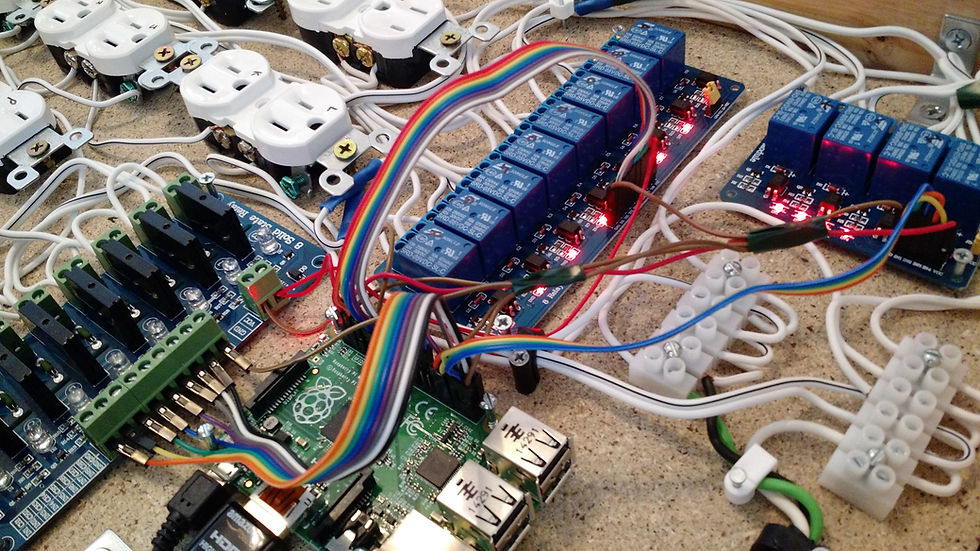
Gateways aren’t middlemen.They’re translators.
A ChirpStack LoRaWAN gateway sees signal paths that devices cannot.An Azure IoT Edge gateway sees multi-device timing interactions.A Balena OS edge node sees local CPU load patterns, local cache behaviours, container health, and local network interference.
Sometimes the gateway knows:
why a device is failing,
why a transmission is delayed,
why uplinks collapse during lunch breaks,
why SNR shifts seasonally,
why edge ML models misclassify at certain hours.
Gateways don’t just forward packets; they contextualise them.
In many real deployments at EurthTech, we’ve seen gateways act as the early warning system — detecting environment-level anomalies long before the devices or cloud realise something is wrong.
A gateway that notices RF congestion can advise devices to back off.A gateway that sees local time drift pushes NTP corrections.A gateway that detects misbehaviour in a batch of devices can quarantine them.
Gateways speak feedback laterally, not just vertically.
They help the system correct itself mid-stream.
When ML Enters the Loop, the System Goes from Reactive to Adaptive
Edge AI nodes aren’t just executing models —they’re evolving models.
A classifier trained on Edge Impulse may behave differently in real deployment conditions.A quantized TFLite Micro model may misclassify under new lighting, heat, vibrations, or mechanical conditions.An ONNX model running in the cloud may identify new clusters or behaviours unseen during training.
And this is where the loop becomes truly intelligent:
The cloud retrains the model.Telemetry reveals new patterns.The device twin records drift.MLOps pipelines generate a new quantized model.OTA distributes weight updates.The device adopts the new model.And the edge sends new patterns upward.
This cycle repeats forever.
At some point, you're no longer “deploying” ML.Your system is learning.
It learns from itself.From its mistakes, from its drifts, from its anomalies, from its successes, from its failures, from its collective behaviour.
This is the feedback loop achieving maturity.
Feedback Loops Don’t Reduce Errors — They Reduce Surprises
This is the part most people misunderstand.
A feedback loop doesn’t eliminate problems.It makes problems predictable.
It turns anomalies into early signals instead of late disasters.It turns ML drift into retraining triggers.It turns battery decline into warning curves.It turns radio instability into adaptive schedules.It turns firmware bugs into health metrics.It turns field failures into OTA strategy shifts.It turns calibration drift into automatic correction.
The goal of a feedback loop is not error reduction.It is surprise reduction.
A good IoT system still experiences anomalies.A great IoT system expects them.
And builds mechanisms to adapt.
The Loop Becomes a Personality — Not a Feature
Over time, something unexpected happens.Your IoT system develops a rhythm — a personality.
It has a way it reacts to drift.A way it handles failures.A way it absorbs OTA.A way it re-centers after anomalies.A way it tunes thresholds.A way it adjusts sampling.A way it adapts ML models.A way it converges truth across device, gateway, cloud, and twin.
This personality is not programmed.It emerges.
When thousands of devices run firmware built on ESP-IDF or STM32 HAL or Zephyr, with ML inference in TFLite Micro, reporting through EMQX MQTT, feeding cloud analytics built on InfluxDB or TimescaleDB, monitored with Grafana, secured with liboqs PQC flows, updated by Mender, synchronized through Azure Digital Twins or AWS IoT Device Shadow the system stops being a static architecture.
It becomes a living system.
It becomes something that grows, stabilises, adapts, predicts, and corrects itself.
This is the quiet power of the edge–cloud feedback loop.
A Closing Thought: IoT Intelligence Doesn’t Live in Devices or Cloud — It Lives in Their Conversation
It’s easy to imagine IoT intelligence as something that lives in the edge model or in the cloud pipeline or in the ML server or in the gateway.
But intelligence is not a location. It is the conversation between all these pieces.
The edge senses reality.The cloud senses patterns.The gateway senses environment.The twin senses identity.Telemetry senses drift. OTA senses evolution.Security senses trustworthiness.
The feedback loop is the synthesis —the place where reality, memory, analysis, and adaptation merge into one coherent system.
When an IoT deployment reaches this state, you feel something rare:
It becomes predictable. Self-correcting.Alive.
And from that point onward,you’re not just operating a system —you’re tending to an ecosystem.
That is the beauty of IoT done right.That is the future of edge–cloud intelligence.And that is why feedback loops matter more than any individual piece of technology in the stack.


Comments