


Why Battery Life Claims Are Almost Always Wrong

There is a number that appears in almost every IoT conversation sooner or later.
“Two years on a coin cell.” “Five years on AA batteries.” “Ten years with one battery replacement.”
The number is usually spoken with confidence. It looks clean in a presentation. It feels reassuring. And in many cases, it is quietly wrong.
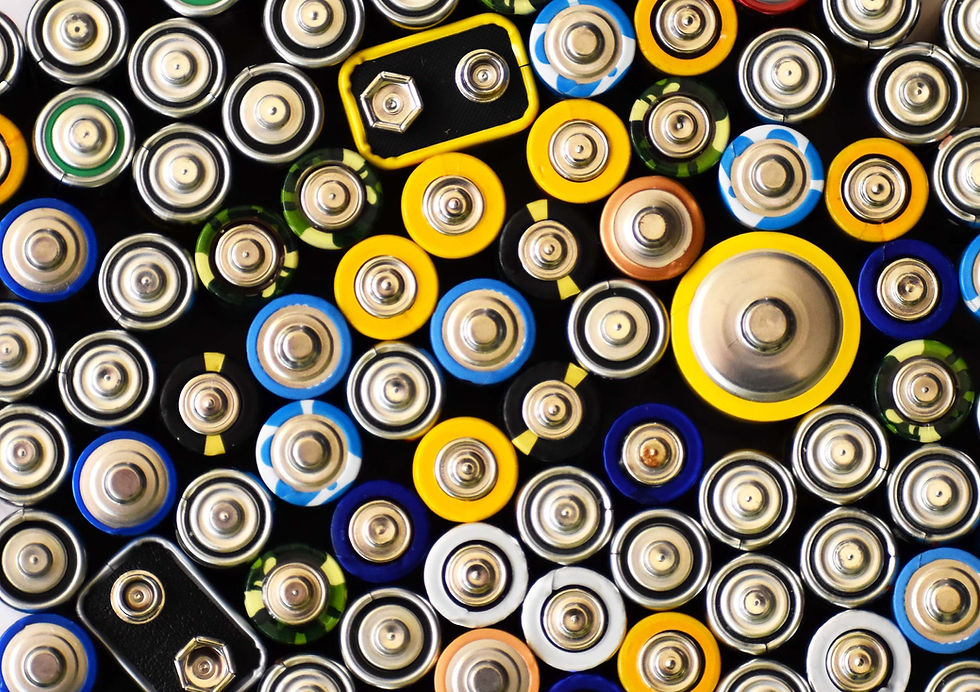
At EurthTech, we’ve learned to be cautious whenever battery life is expressed as a single number. Not because engineers are careless, but because battery life is one of those things that behaves well in theory and refuses to cooperate in the real world.
Batteries don’t fail the way software fails. They don’t crash. They don’t throw errors. They simply deliver less than expected, slowly enough that nobody notices until the system begins to feel unreliable.
Battery life calculations almost always begin in good faith. Someone measures current consumption. Someone averages numbers. Someone multiplies by capacity. The math works. The spreadsheet closes. The product moves forward.
What the spreadsheet does not capture is behavior.
A device in the field does not draw current evenly. It sleeps most of the time and then wakes violently. It transmits in bursts. It retries when networks are bad. It wakes unexpectedly. It runs longer when conditions are cold. It works harder when signals are weak. It ages.
Those moments matter more than the average.
We’ve seen devices where ninety-eight percent of their energy was consumed in less than two percent of their runtime. A few bad days of poor connectivity erased months of careful power budgeting. A handful of unexpected retries reduced battery life by half.
From the outside, nothing looked broken. From the inside, the battery was quietly paying the price.

Environmental conditions make the problem worse.
Datasheets usually assume room temperature. Field deployments rarely enjoy that luxury. Cold reduces effective capacity. Heat accelerates aging. Humidity affects internal resistance. Load profiles interact with chemistry in ways that are hard to predict.
A battery that comfortably supports a device in the lab can struggle in winter. A system that looks stable in summer can degrade faster than expected in hot enclosures. These effects don’t show up evenly. They show up as variability across the fleet.
This is where battery life becomes a business issue, not an engineering one.
If ten percent of your devices die early, support costs spike. If replacements are uneven, trust erodes. If maintenance schedules become unpredictable, operations suffer. The battery did not fail catastrophically. It simply refused to obey the promise that was made for it.
Another quiet contributor to wrong battery claims is firmware behavior under stress.
In controlled tests, devices behave politely. In the field, they become anxious.
They retry more often when networks are unstable. They scan longer when signals are weak. They stay awake longer when time synchronization fails. They log more when errors occur. Each of these behaviors is individually reasonable. Together, they form a slow leak.
We’ve seen products where a rare network issue caused devices to remain awake just a few seconds longer per cycle. Over weeks, those seconds accumulated into days of lost battery life. No single log entry looked alarming. The battery simply drained faster than planned.
This is why power-aware firmware must be pessimistic, not optimistic. It must assume the world will misbehave. It must cap retries. It must enforce sleep even when things go wrong. It must prefer silence over desperation.
That mindset rarely exists in PoCs. It only appears once batteries start dying in the field.
Measurement itself is another trap.
Many teams measure average current and feel confident. But average current hides peaks, and peaks are where batteries suffer. A brief transmission spike can momentarily demand currents that stress internal resistance. Over time, those stresses matter more than steady consumption.
This is why tools like Joule scope and Nordic PPK2 change how teams think about power. They don’t just show how much energy is used. They show when it is used. They reveal patterns that averages conceal.
Once teams see those traces, battery life stops being abstract. It becomes behavioral.
There is also a psychological aspect to battery claims that is rarely discussed.
Marketing wants a number. Sales wants a promise. Customers want certainty. Engineers want caveats.
Somewhere in the middle, nuance gets flattened.
“Up to five years” becomes “five years.” “Typical usage” becomes “normal conditions.” “Lab estimates” become “expected life.”
None of this is malicious. It is the natural outcome of compressing uncertainty into a sentence.
The problem is that batteries don’t respect optimism.

The most reliable products we’ve seen take a different approach. They treat battery life as a distribution, not a guarantee. They monitor real consumption in the field. They adapt behavior when energy budgets tighten. They alert before failure instead of after. They design systems where battery replacement is manageable, not catastrophic.
They also communicate differently.
Instead of promising a number, they describe behavior. Instead of hiding variability, they acknowledge it. Instead of assuming perfect conditions, they design for bad ones.
From a business perspective, this honesty pays off. Customers forgive variability far more easily than broken promises.
At EurthTech, we no longer ask, “How long will the battery last?”We ask, “What has to go wrong for the battery to die early?”
That question changes everything.
It forces teams to think about retries, not averages. About winter, not room temperature. About aging, not fresh cells. About worst weeks, not best days.
Battery life stops being a feature and becomes a risk profile.
And once you think about it that way, your product decisions change. Firmware becomes calmer. Radios become quieter. Sensors become more selective. The system learns restraint.
The truth is that battery life claims are not lies. They are stories told under ideal conditions.
The real world writes a different story.
Products that survive are the ones that listened early enough.


Comments