


Why IoT Is a System Design Problem, Not a Device Design Problem

Srihari Maddula
Many IoT initiatives begin with the device. Engineers debate microcontrollers, sensors, radios, power budgets, and enclosures. The assumption is straightforward: if the device is engineered well enough, the system will succeed.
In practice, this assumption fails more often than teams expect.

Some of the most carefully engineered devices struggle after deployment. At the same time, many “good enough” devices thrive in harsh environments, delivering consistent business value for years.
The difference is rarely the device. It is almost always the system.
The perfectly engineered device that still fails
Consider a device designed with care and discipline. High-accuracy sensors. A well-characterized RF front end. Tight power modelling. Clean firmware architecture. Extensive lab validation. All specifications met, often exceeded.
On paper, it is a strong device.
Once deployed, problems emerge. Connectivity is less reliable than expected. Maintenance effort grows. Firmware updates become risky. Actuation is inconsistent. The device spends more time being managed than delivering value.
Nothing is obviously broken. The device is doing what it was designed to do. The environment, workflows, and system assumptions were not designed with the same rigor.
The device was engineered in isolation. The system was not.
The “good enough” device that succeeds
Now consider a different deployment. The device is simpler. Sensors are noisier. The MCU is modest. The radio link is unreliable. Power margins are tight.
Yet the system succeeds.
Data arrives often enough to be useful. Missed packets are tolerated. Backend logic smooths noise and detects trends. Actuation is verified over time rather than assumed instantly. Human workflows handle exceptions.
The device is not perfect. The system is forgiving.
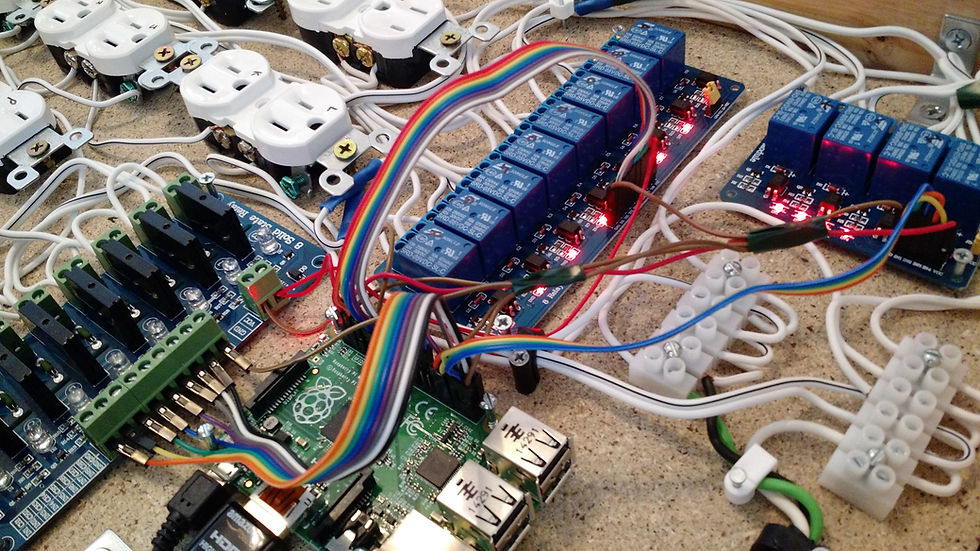
This is not accidental. It is the result of architectural choices that prioritise outcomes over component excellence.
Device design optimises correctness, system design optimises outcomes
Device engineering focuses on precision, efficiency, and compliance. These are necessary qualities, but they optimise local correctness.
System design focuses on something different: whether the overall behaviour delivers value under real conditions.
A system can tolerate:
Noisy sensors if trends matter more than instant values
Unreliable links if retries and aggregation are built in
Limited compute if complexity is shifted elsewhere
Imperfect actuation if verification and fallback exist
These tolerances do not emerge from device design alone. They emerge from how devices, networks, software, and operations interact.
Systems fail at the boundaries, not the centre
Most device designs perform well at the centre of their operating envelope. Failures appear at the boundaries: low power, poor connectivity, degraded components, unusual timing, partial updates.
System design determines what happens at those boundaries.
A device-centric approach often treats boundary conditions as rare exceptions. A system-centric approach assumes boundary conditions are normal and designs behaviour around them.
This difference becomes visible only after deployment, when edge cases become the majority case.
Integration layers carry more risk than hardware
In real IoT systems, most failures occur not in sensors or radios, but in integration layers.
Timing mismatches between device and backend.
Assumptions about message ordering.
Implicit expectations about availability.
Operational workflows that do not match system behaviour.

These layers are invisible in device specifications. They are where system design matters most.
A well-designed system explicitly defines how data is interpreted, how actions are confirmed, and how uncertainty is handled across layers.
Business value depends on lifecycle behaviour
From a business perspective, success is not defined by how impressive a device looks at launch. It is defined by how the system behaves over years.
Does it degrade gracefully?
Does maintenance effort scale?
Can it be updated safely?
Does it tolerate environmental change?
These questions cannot be answered at the device level. They require system-level thinking that spans hardware, firmware, backend software, operations, and people.
A “perfect” device that requires constant intervention is a liability. A “good enough” device in a resilient system is an asset.
Why teams default to device-centric thinking
Device design is tangible. It has datasheets, schematics, and test results. System behaviour is emergent and harder to quantify.
It is easier to optimise what can be measured than what must be observed over time.
This bias leads teams to invest heavily in device perfection while under-investing in system architecture, integration, and operational modelling. The imbalance only becomes visible after deployment, when changes are expensive and risks are real.
System design is about deliberate trade-offs
Holistic IoT design is not about making everything better. It is about making conscious trade-offs.
Accepting weaker devices to enable scale.
Accepting latency to gain robustness.
Accepting uncertainty to reduce operational cost.
These trade-offs must be made explicitly and early. When they are left implicit, systems fail in unpredictable ways.
The EurthTech perspective
At EurthTech, we rarely start by optimising the device. We start by understanding the system the device must survive in.
We ask how connectivity will behave over time, how power availability will vary, how maintenance will actually happen, and how business decisions depend on system output. Device design follows from those answers.
IoT is not a device problem that scales up. It is a system problem that happens to include devices.
Teams that recognise this early build systems that endure. Teams that discover it later usually discover it the hard way.


Comments